The Socratic Method
The SAT is fundamentally a reasoning test. The student who understands why an answer is right or wrong—and can articulate it—is far more prepared than the student who’s been walked through the solution.
We often hear that the SAT is a game. You pay the tutor, a sort of gatekeeper to the test’s hidden tips and tricks, and hopefully, upon learning these secrets, your score shoots up 200 points. Yes, there are a few tricks, but the reality is that effective test prep boils down to two things: the disciplined repetition of critical thinking skills and content mastery.

Critical Thinking
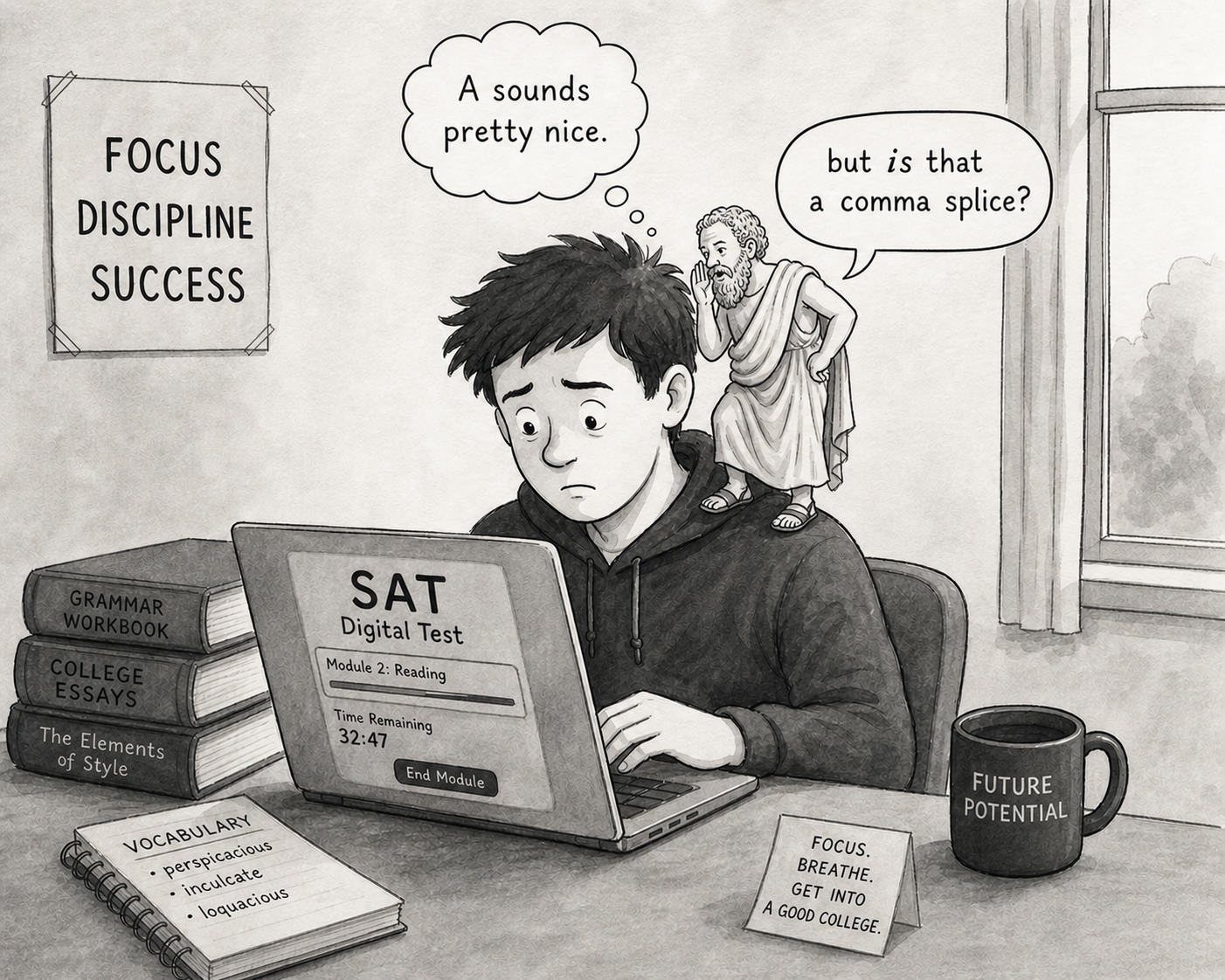
A novice test taker might cruise through easier reading questions, but when they arrive at level 2 and 3 questions, their confidence often wanes. The classic stream of consciousness might be: I like answer option A, but D also seems pretty good. Ehh I’ll go with A because I think it’s a little better. Hm, now D’s actually looking pretty good. (Long pause). Whatever I’ll come back to it…
We’ve all been there. It’s normal. But this is where the Socratic method earns its place. Even my highest performing students are met with a barrage of pesky but very important questions: What is the claim? As if you were explaining it to a fifth grader? Why is B incorrect? Is that directly supported by the text? Where? Before looking at the answers, what do you anticipate the correct answer being?
After a few weeks of tutoring, my goal is for students to have created a little imaginary critic who stands on their shoulder. Come test day, this critic whispers the same questions into their ear. The reading pro is one who constantly appeases the critic via a steadfast reliance on logic. It’s never “A is better than B”, but rather “A is right and B is wrong for this reason”.
Content Mastery
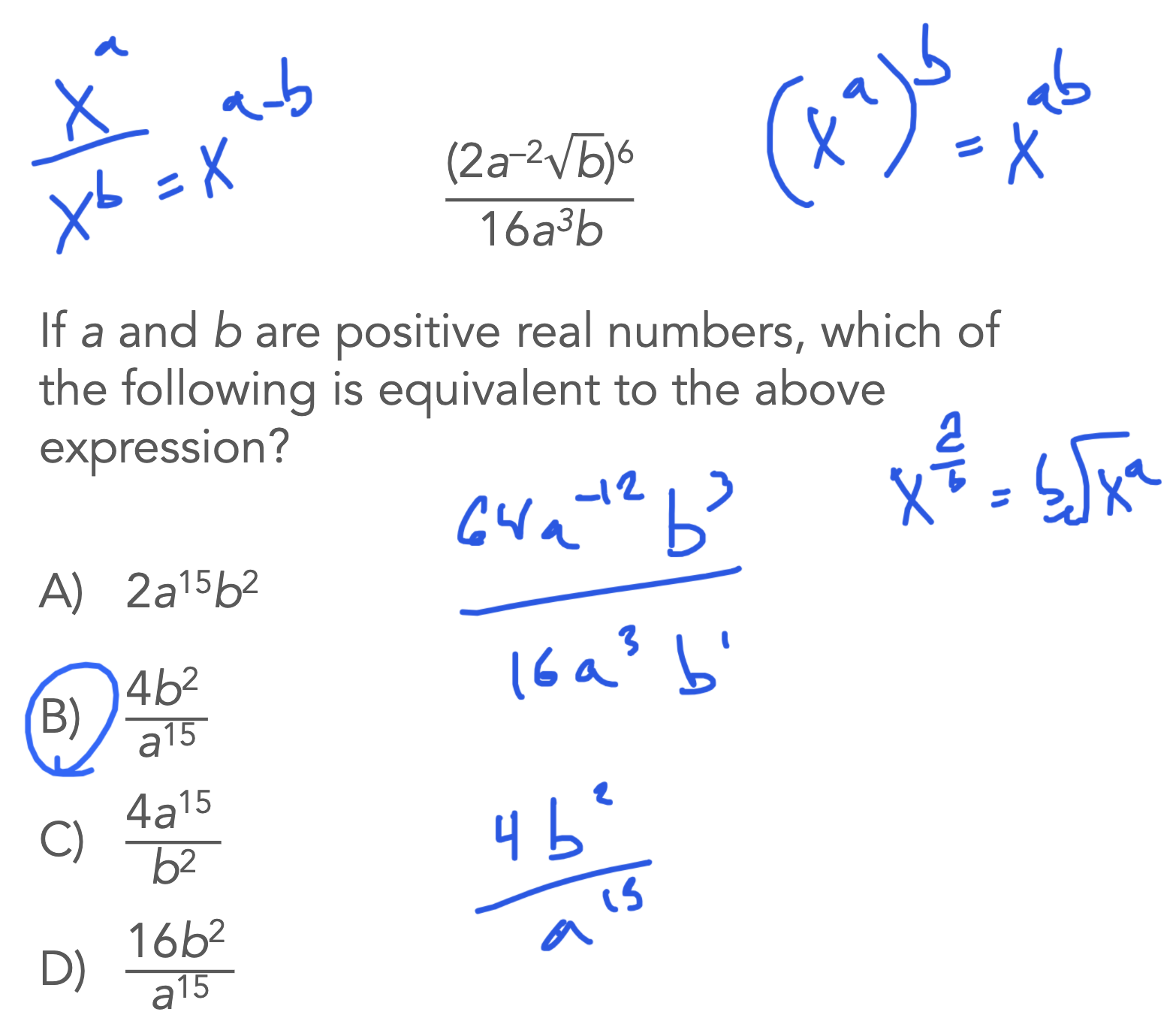
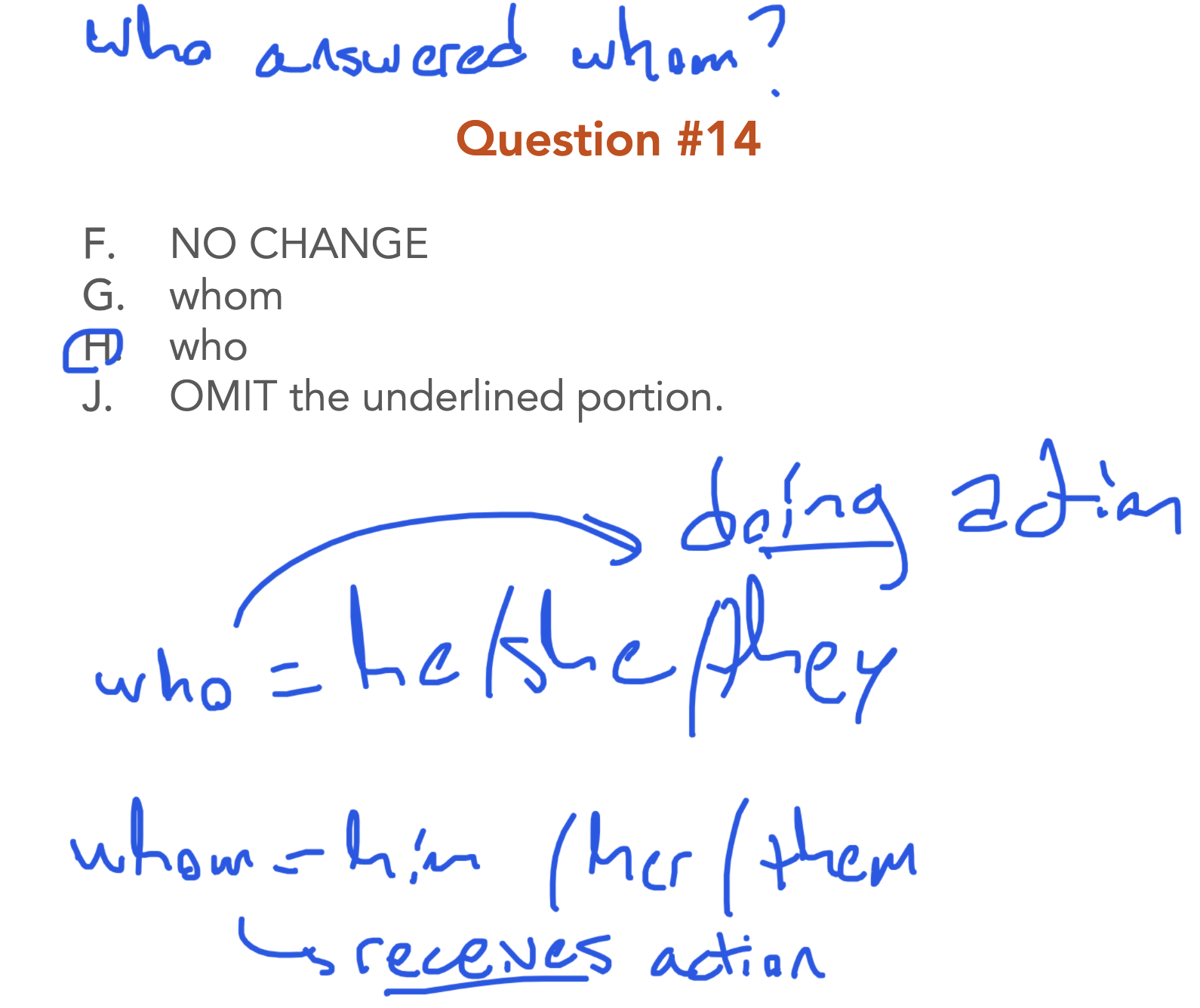
Not everything on the SAT can be reasoned from scratch. Some things simply need to be learned - the vertex form of a parabola, the rules of a comma splice, the relationship between sine and cosine. There are roughly 25 core math concepts and 10 grammar rules that appear repeatedly across every test. We cover all of them, systematically, with targeted practice at every level.